October 6, 2026
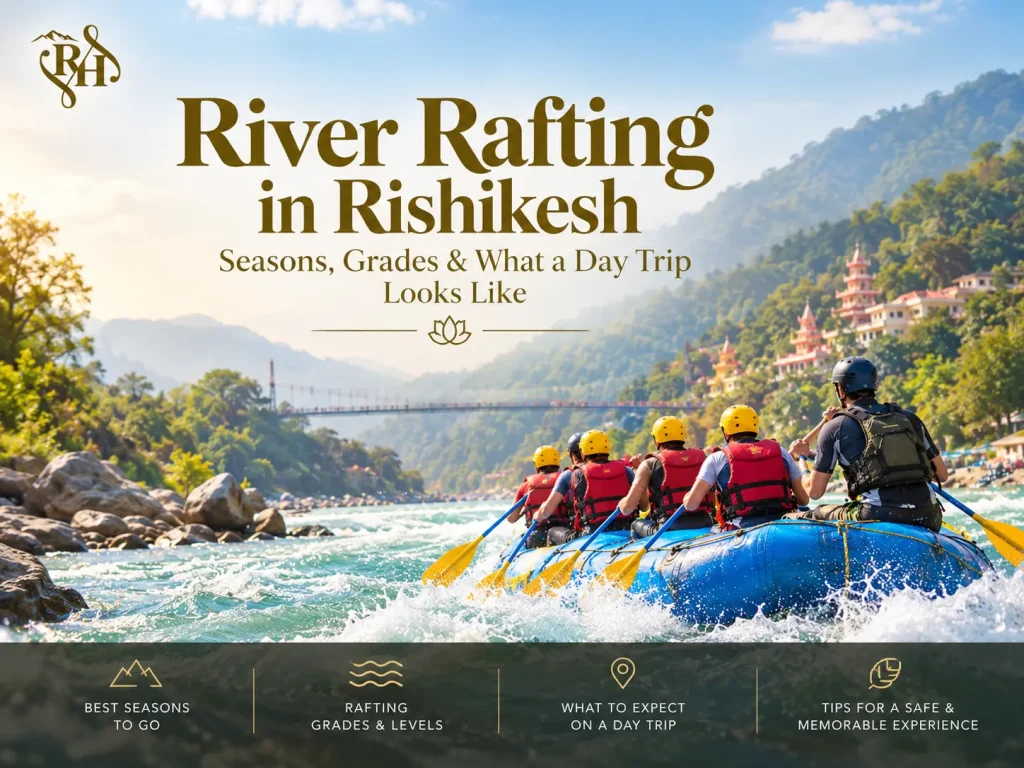
Rishikesh is one of the most popular river rafting destinations in India, largely because of where it sits: right where the Ganga comes down out of the Himalayas, still fast and cold, before it widens and slows further downstream. That combination of accessible location and genuine white water is why so many first-time rafters choose Rishikesh over other options. Here’s what actually goes into planning a trip.

When the Season Runs
Rafting in Rishikesh generally operates from mid-September through June, with a mandatory pause during the monsoon months of July and August, when the river rises too high and moves too fast for safe rafting. Outside that window, conditions still vary noticeably by month.
September to November – The river is at its clearest and most energetic right after monsoon, with strong water levels. This stretch is often considered the best overall window for experienced rafters wanting bigger rapids.
December to February – Water levels drop and the river runs colder, often requiring a wetsuit. Rapids are generally calmer in this period, making it a reasonable choice for first-timers who want a gentler introduction.
March to June – Water levels rise again as snowmelt feeds the river from higher up, bringing back stronger rapids before the pre-monsoon heat sets in by late May and June.
If the size of the rapids matters more to you than the weather, timing your trip for right after monsoon or during the spring snowmelt period makes the biggest difference.
Understanding the Rapid Grades
Rafting difficulty is measured on an international scale from Grade I (very mild) to Grade VI (not commercially run). Rishikesh’s stretches typically fall between Grade I and Grade IV+, and different sections of the river are graded differently:
- Grade I to II – Gentle, suitable for beginners, families, and anyone wanting a scenic float rather than an adrenaline trip
- Grade III – Moderate rapids with some real excitement, a common choice for first-time rafters wanting more than a flat-water trip
- Grade IV to IV+ – Technical, fast-moving rapids that require some fitness and ideally a bit of prior experience; this is where most of Rishikesh’s well-known named rapids fall.
Most operators let you choose a stretch based on grade, so it’s worth being honest about your comfort level rather than defaulting to the longest or most advertised route.
What a Typical Day Looks Like
A standard rafting day in Rishikesh usually starts with a briefing and safety demonstration before getting into the water, covering paddle commands, what to do if you fall in, and how the raft and life jackets work. From there:
- Half-day trips – typically cover a shorter stretch, often 9 to 16 km, lasting around 2 to 3 hours on the water
- Full-day trips – cover a longer stretch, sometimes starting further upstream, and can include a break for lunch along the riverbank
- Most trips end somewhere near Rishikesh town, with transport back arranged by the operator
Life jackets and helmets are standard equipment, and most operators provide a safety kayaker or support boat trailing the group on longer or higher-grade stretches.
Basic Safety Expectations
Operators in Rishikesh are generally required to follow safety protocols set by the state tourism and disaster management authorities, which include certified guides, mandatory safety equipment, and restrictions during unsafe water conditions. A few practical points worth knowing before booking:
- Choose an operator who gives a proper safety briefing rather than rushing straight into the water
- Non-swimmers can still raft on lower grades with a life jacket, but it’s worth mentioning this to the operator beforehand
- Children are usually only permitted on lower-grade, calmer stretches, and age minimums vary by operator
- Rafting is suspended entirely during monsoon and sometimes temporarily after heavy rain, even outside peak monsoon months
Conclusion
Rishikesh’s rafting season runs most of the year outside monsoon, but the experience changes meaningfully by month, from the bigger, colder water of early spring to the calmer stretches of winter. Matching your trip to your comfort level, in terms of both season and rapid grade, makes a bigger difference to how much you enjoy it than simply booking the first operator that comes up in a search.
If you’re planning a rafting trip, staying close to the river makes the early morning starts easier. Hotel River Heaven sits on the banks of the Ganga near Triveni Ghat, within easy reach of most rafting put-in points, making it a convenient base before or after a day on the water.