October 19, 2026

Camping in Rishikesh usually means a night in a tent at a riverside or hillside camp, with meals, a bonfire and optional activities such as rafting. It is a good fit for groups, adventure travelers and budget-minded visitors, and a weaker fit for anyone who wants privacy, comfort or very reliable weather.
- Best months – October to March, and again from spring until the pre-monsoon heat
- Avoid: July and August, when heavy rain and a high river make camping unsuitable
- Biggest quality differences between camps – safety, hygiene and washrooms, and how close the camp is to the road and the river
- Always confirm – current local rules and what the price actually includes
The rest of this guide explains each point so you can compare camps with confidence.
What a Rishikesh Camp Usually Looks Like
Most camps set up tents near the river or on a hillside, with shared facilities and a common area for meals and a bonfire. The experience varies widely, from simple tents with shared washrooms to more comfortable setups with attached bathrooms and proper beds.
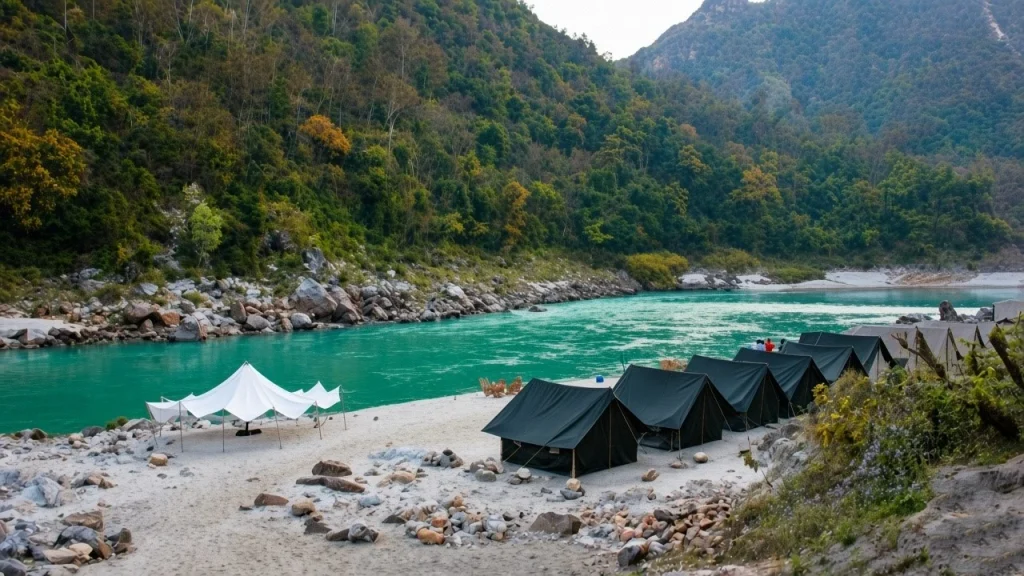
Rules about where camps may operate, especially close to the riverbank, have changed over time and are regulated locally. Details can differ by area and season, so it is worth asking an operator directly instead of relying on older articles.
What’s Usually Included
Packages differ, but many include:
- A tent and bedding – often basic mattresses, blankets and sleeping bags
- Meals – typically dinner, breakfast and sometimes lunch, usually vegetarian in line with local norms
- A bonfire and music – common in the evening
- Basic activities – such as volleyball, cricket or a short river-side walk
Often charged separately
- River rafting
- Cliff jumping, bungee and other adventure activities
- Transport to and from the camp
- Extra meals, tea and snacks
- Upgraded or private tents
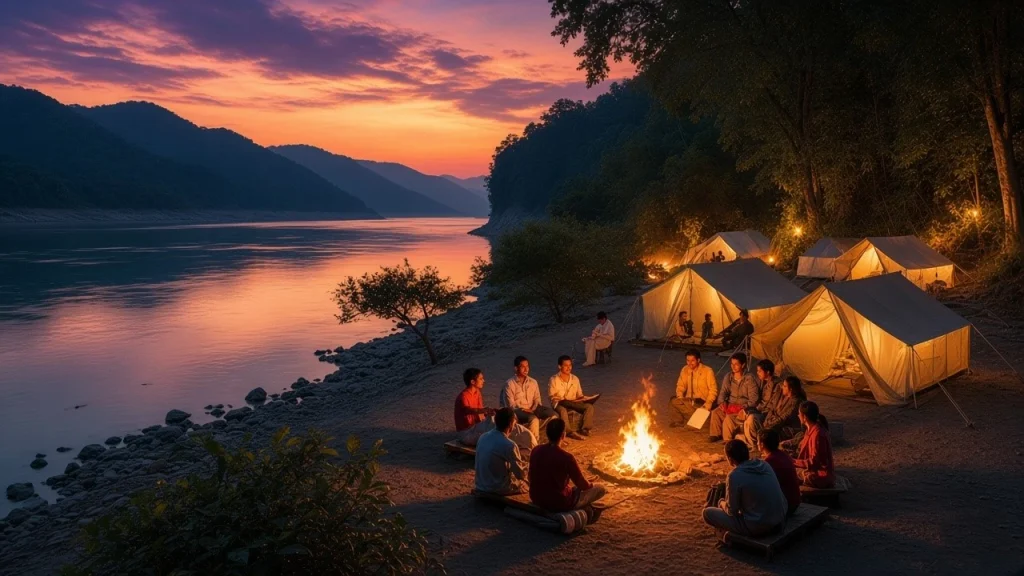
Tip: ask for the inclusions in writing, and compare packages item by item. A low headline price can leave out meals or transfers.
Best Time for Camping in Rishikesh
| Months | What to expect |
|---|---|
| October to February | Cool, clear and comfortable, with cold nights, especially December and January |
| March to May | Warm days, pleasant evenings early on, and hot afternoons by May |
| June | Pre-monsoon, humid and unpredictable |
| July to August | Monsoon, with heavy rain and a high river, so camping is generally not suitable |
| September | Rain tapers off, and conditions improve toward the end of the month |
A month-by-month weather guide for Rishikesh gives more detail on temperatures and river conditions.
Who Camping Suits
- Groups of friends – shared tents and a bonfire suit a lively trip
- Adventure travelers – many camps bundle rafting and outdoor activities
- Budget-minded visitors – camps are often cheaper than hotels, though prices vary
- Travelers wanting an outdoors night – the setting is the main appeal
Who May Prefer a Hotel
- Travelers wanting privacy and quiet – camps are often social and noisy in the evening
- Families with young children or older travelers – hotel rooms offer easier washrooms, warmth and safety
- Visitors in cold or wet months – a room is far more comfortable
- Anyone wanting reliable sleep – tents offer less insulation from noise and temperature
How to Choose a Camp: A Practical Checklist
- Safety first – check how far the camp sits from the river’s edge, and whether it has trained staff and basic first aid
- Washrooms and hygiene – ask about the number of washrooms, whether they are attached, and how often they are cleaned
- Location – a camp very close to the road can be noisy, and one far from town may add long transfers
- Tent quality – ask about bedding, insulation and whether the tents are waterproof, especially from late autumn to winter
- Inclusions – get meals, activities and transfers confirmed in writing
- Recent reviews – read recent, detailed reviews, and pay attention to comments on hygiene and safety
- Local rules – confirm that the camp operates legally and ask about any restrictions that may affect your stay
- Group size and atmosphere – if you want quiet, ask whether the camp hosts large party groups
Practical Tips for Your Night
- Pack warm layers – nights by the river can be much colder than the day, even in shoulder months
- Carry the essentials – a torch, a power bank, insect repellent and any personal medication
- Keep valuables secure – tents can be hard to lock
- Respect the river – do not swim in unmonitored areas, since the Ganga’s current is stronger than it looks
- Follow local norms – the area is largely vegetarian and alcohol-free, and rules vary by neighborhood
Frequently Asked Questions
Is camping in Rishikesh safe?
It can be, with a well-run camp and sensible habits. Choose one with trained staff, keep clear of the river’s edge at night, and avoid camps that cannot answer basic safety questions.
What is the best time for camping in Rishikesh?
October to March is the most comfortable for most travelers. Monsoon months are generally not suitable.
Is rafting included in camping packages?
Sometimes, but often it is charged separately. Check the package details in writing.
Is camping cheaper than a hotel in Rishikesh?
Often, but not always. Once rafting, meals and transfers are added, the difference can be small.
Can families camp in Rishikesh?
Yes, with the right camp, though young children and older travelers may find a hotel room easier.
Conclusion
Camping in Rishikesh suits travelers who want a social, outdoors night by the river, with a bonfire and a bundled activity or two. It suits fewer people in cold or wet months, or those wanting privacy, quiet and dependable comfort. Comparing inclusions, checking safety and hygiene, and confirming local rules makes the difference between a memorable night and a disappointing one.
For travelers who prefer a proper room, Hotel River Heaven offers Ganga view rooms a short distance from Triveni Ghat, with the river close by and the comfort of a private bathroom.